Brazil Travel Course
Move beyond surface level stereotypes to explore Brazil’s rich history, diverse cultures, contemporary society, and extraordinary natural environment through immersive, firsthand experiences.
OVERVIEW
Course: TRVL 300-01: 4 credits
Professor: David Cupery
Dates: Spring Break ’27, 11 days & 10 Nights
exact dates dependent on final airline scheduling
Travel Costs: $2,500
CONTACT INFO
Professor Cupery
413-662-5493
RESOURCES
Course Info
Despite Brazil’s enormous territory, abundant population, and immense global influence, most Americans know little of the country beyond surface level stereotypes or basic cultural reference points. This course will help students dig beneath the surface and develop a more nuanced understanding of the country by combining several weeks of coursework with approximately eleven days of travel in Brazil.
The classroom component of this 4-credit course will examine Brazilian history, contemporary politics and socioeconomics, identity, popular and artistic culture, and natural environment. Students will be expected to complete weekly meetings, engage in class discussion, and complete some small pre-trip assignments. The group is also expected to work towards basic proficiency in Brazilian Portuguese.
The travel will be organized around visits to sites that showcase the major themes of the course. Activities and site visits will give particular priority to the following themes: Afro-Brazilian history, identity, and artistic expression; Brazilian popular culture, including soccer, street art, music, and food; socioeconomic divisions and change; biodiversity and conservation efforts. These visits will include encounters with Brazilian experts, artists and everyday citizens.
Eligibility
Enrollment is open to all MCLA students but is limited and requires instructor approval before registration. Students interested in participating should contact Professor Cupery to discuss whether the course is a good fit. Professor Cupery has led MCLA Travel Courses to Peru, Cuba, Mexico, Ecuador, and Brazil over the past decade. He is excited to talk to you about your interest in Brazil and in the course.
Destination Highlights
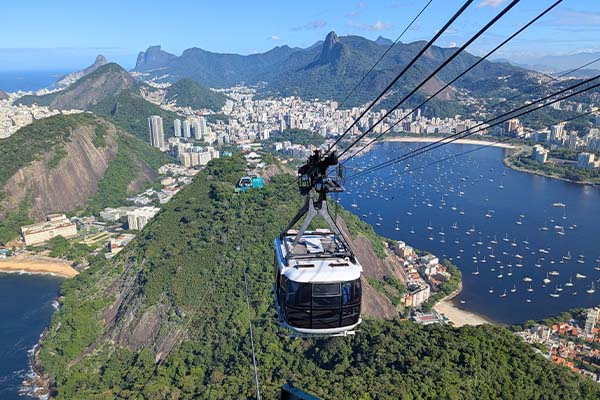
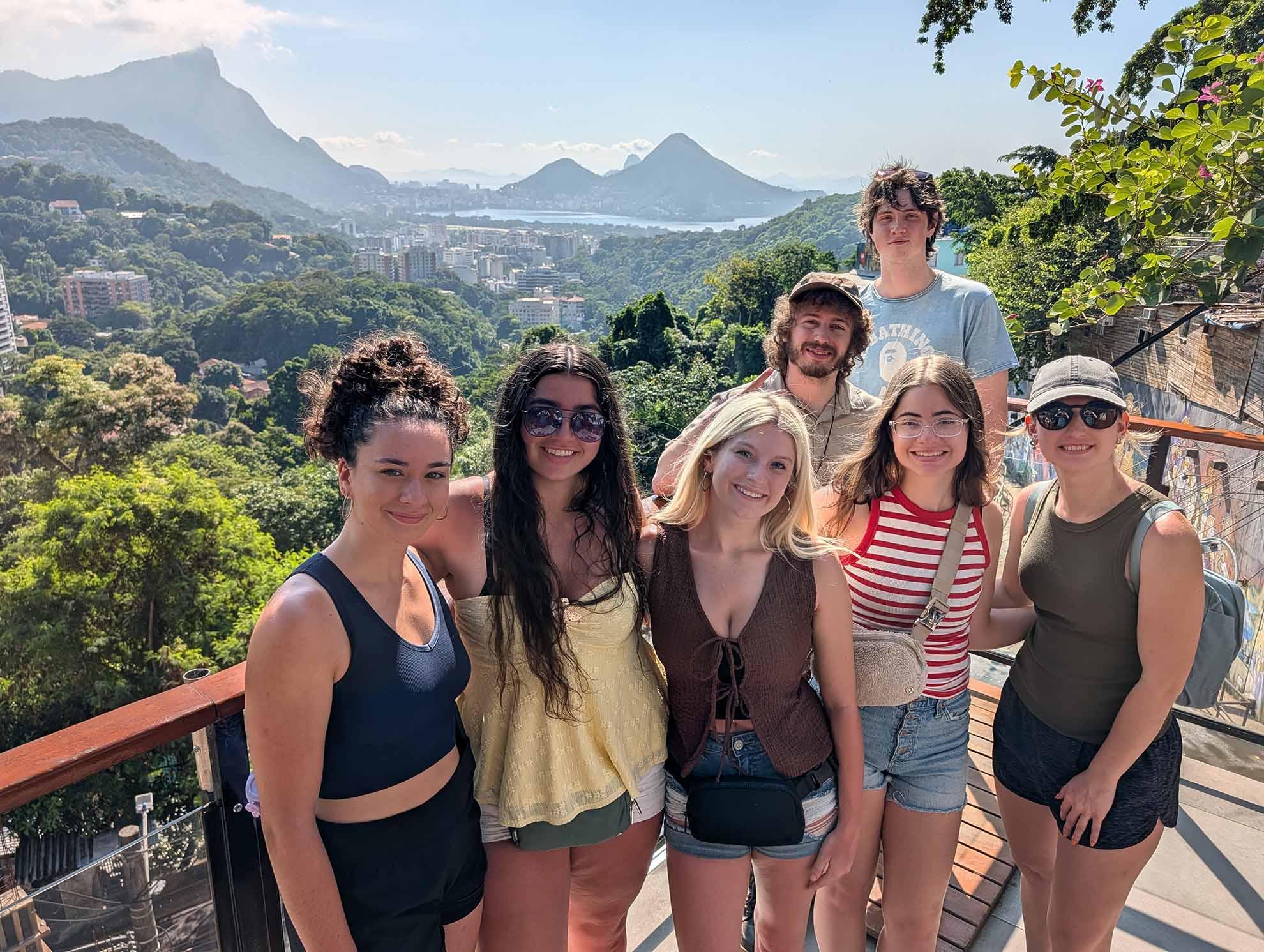
Rio is one of the iconic cities of the world. It features a spectacular natural setting with steep, forested mountains, dozens of bays and islands, and miles of sandy beaches. Mixed in with all the nature are diverse layers of humanity. Skyscrapers with varying architectural styles. Neighborhoods ringing bays, hugging coastlines, and covering hillsides. Sparkling water seasoned with fishing boats and oil rigs. Murals, monuments, and graffiti. Rich, poor, and everything in between.
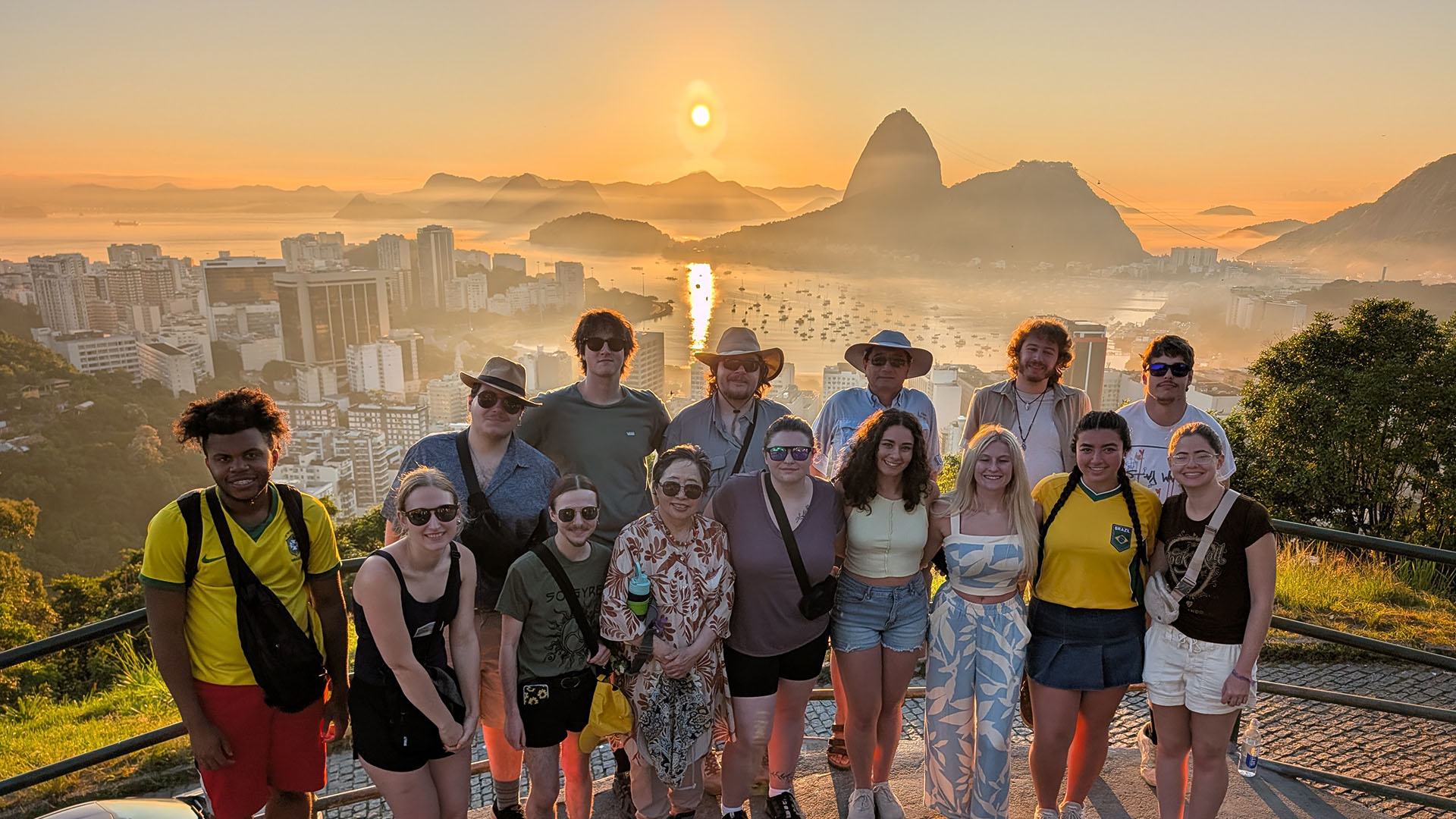
We will spend a third of our trip in Rio. Highlights include a half-day tour—guided by locals—of the Rocinha favela; watching the sunrise (or sunset) from high above Rio, perhaps from Christ the Redeemer; joining cheering and singing fans for a professional soccer game at the famed Maracanã Stadium; and exploring the 200-year-old Botanical Garden, home to a wealth of tropical flora and fauna. You’ll also have ample free time and guidance on how to make the most of it. Our hotel in the Flamengo neighborhood provides a convenient base to make the most of our time.
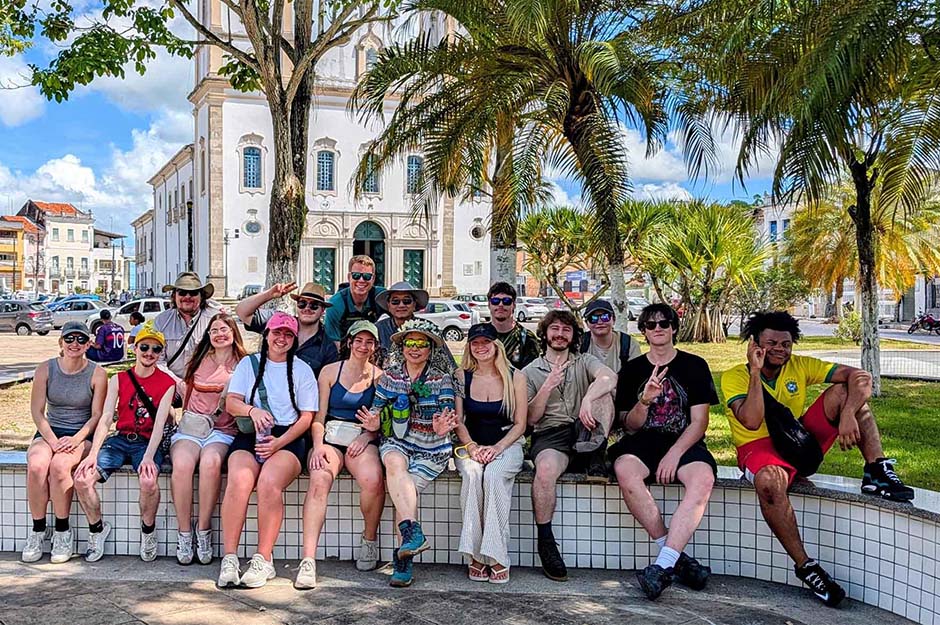
Salvador was colonial Brazil’s first capital. Its northeastern location and access to bays, rivers, and the plantations of the interior turned it into a key piece of early Brazil’s agricultural economy, which was heavily dependent on slavery. Today, some people have identified the city as the most African outside of the African continent. The city's architecture, visual arts, music, dress, food, and religion reveal the diverse influences of Afro-Brazilians, past and present. Salvador’s mix of bright colors, energetic rhythms, friendly people, and coastal setting has made it a favorite for visitors, Brazilians and foreigners alike.
We will spend a third of our trip in Salvador. Highlights include a walking tour of
the city’s historic center—the Pelourinho—full of ornate churches, pastel colors,
busy plazas, and hidden gems; a class in a capoeira school (yes, you will kick, dance,
and try to play the drums); a live performance by the world-renowned Balé Folclórico
da Bahia; and sunset (with live music) from a hillside lighthouse overlooking the
coastal strip in Barra. You’ll have free time to explore and personalize your time
in Salvador. And our hotel on the edge of the historic district has a great pool for
washing away the humidity of the day (and night).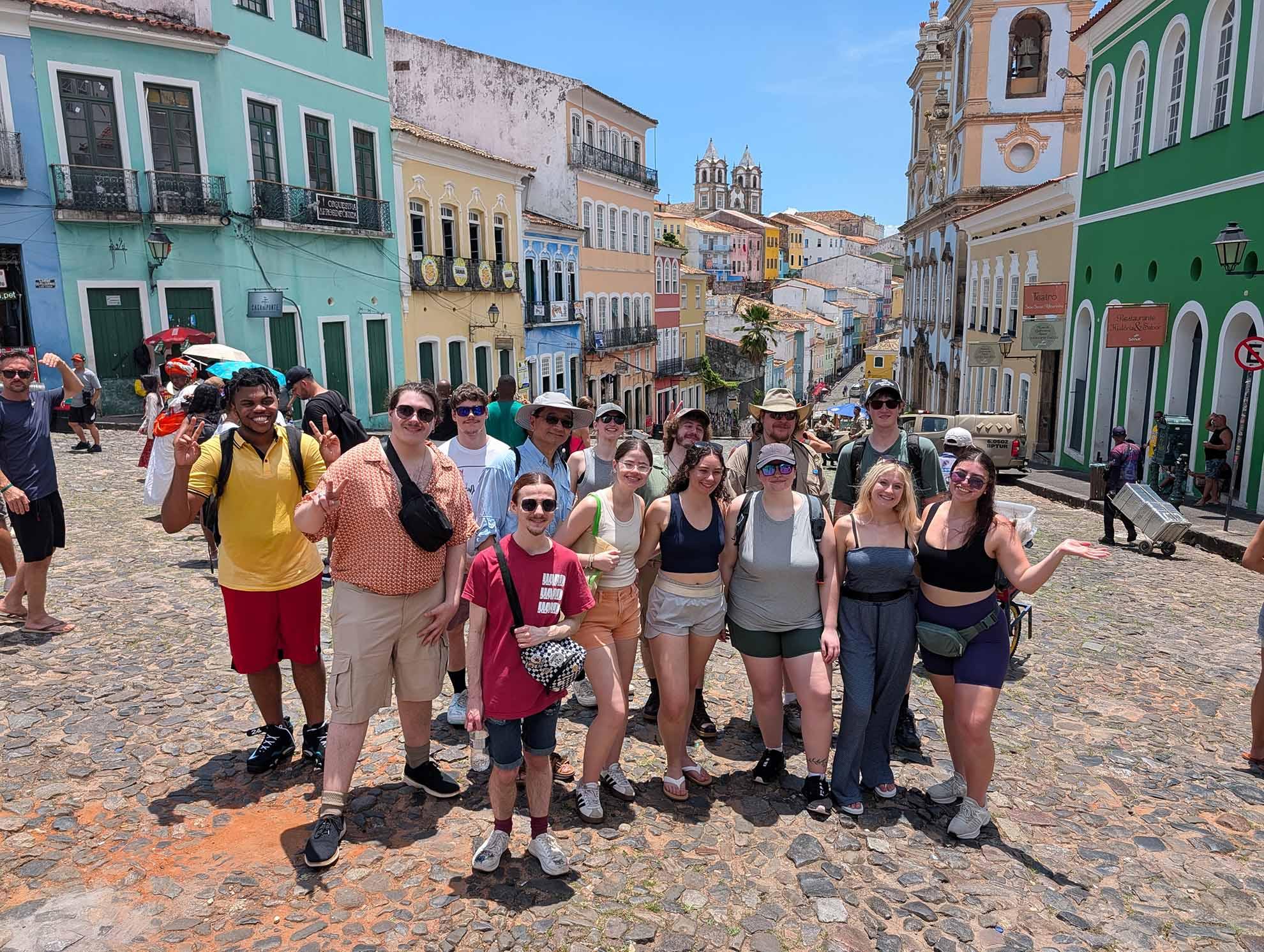
If you follow the bay and the rivers inland from Salvador, you quickly encounter a Brazil that is much more rural and agricultural but still very heavily influenced by African roots. The most visible legacy of the plantation economy’s reliance on the institution of slavery is in the region’s demography. But the story is more complex and rich than that.
Our group’s first stop in this region is a half-day guided visit to Quilombo Kaonge,
an isolated community born as a refuge for escaped slaves that has persisted to this
day. Another highlight is a riverboat tour where we will see the decaying remains
of old mills and flocks of very lively birds. A walking tour and strolls around small-town
Cachoeira will give us a feel for a much more rural version of Brazil than we will
experience in the cities.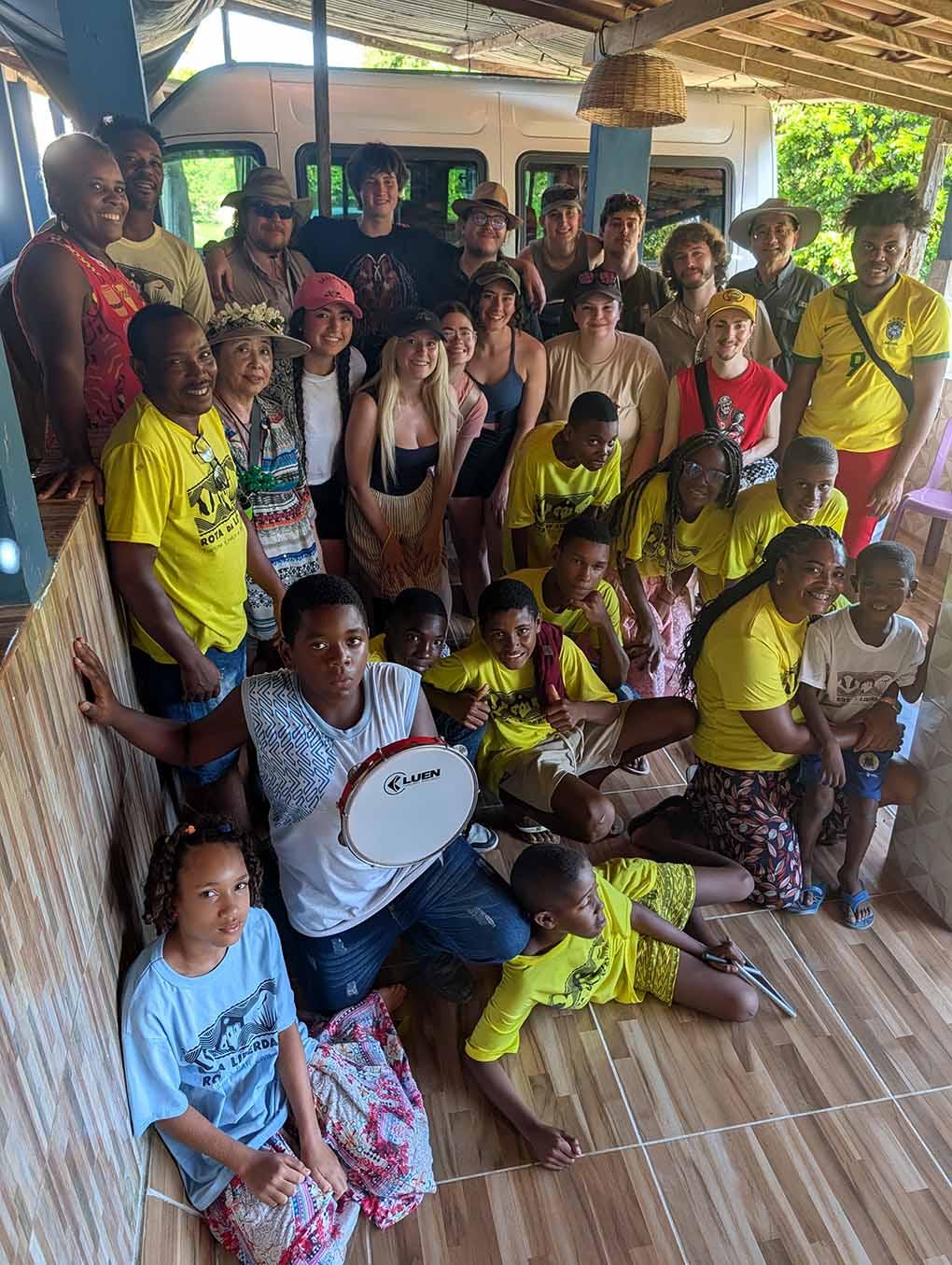
Learning Objectives
- Students will familiarize themselves with different Brazilian cultural groups and contrast their own values, opportunities and experiences with those of these groups.
- Students will understand the historical evolution of Brazil politics and society, including the country’s multifaceted relations with the United States.
- Students will comprehend present-day Brazil’s socioeconomic diversity.
- Each student will obtain a deeper understanding of one aspect of Brazilian politics, history, economics or society through a research project that relies partly on in-country experiences and observations.
- Students will situate the value of their travel within their larger college experience.
Cost: approximately $2,500
Includes:
- Ground transportation to and from either NYC or Boston
- Rountrip international airfare
- One domestic flight in Brazil
- All required ground transportation in Brazil
- Approximately ten nights of ~3-star hotels
- All group activities, entrance fees, guiding, and tips
- Travel health insurance
- Daily buffet breakfasts
- ~7 group dinners
Not Included: - Daily lunches & ~4 dinners
- Optional snacks and soft drinks
- Souvenirs
- Any paid activities on during free days
- 10-year Brazilian tourist visa (~$80)
Payment Schedule:
- $600 deposit due on Friday, Oct. 23
- $600 due by Friday, Nov. 7
- $750 due by Friday, Dec. 4
- $750 due by Friday, Feb. 12
Students should be advised that the trip will likely involve challenging moments and
may not be for everyone. Our days are often long and tiring and can be intense. All
group members will be expected to walk several miles a day in hot and humid weather.
Some of this walking will be on uneven terrain. You may also encounter bugs or other
wild animals. Our accommodations and transportation may not include all of the services
and comforts that some students are accustomed to. Brazilian food is rich, diverse,
and fascinating, but it can be quite different from typical American fare. Most Brazilians
are very friendly and hospitable, but they also speak very little English compared
with people in Mexico and many European countries. Participants should also be prepared
to share rooms with other students and to start the day early, arriving punctually
for all group activities. Dr. Cupery is an experienced traveler and trip leader. He
speaks Portuguese, knows the destinations well, and will be there to support you.
But physical and emotional stamina, flexibility, and positivity are essential ingredients
for turning the trip’s challenging moments into opportunities to learn, grow, and
laugh.