
MCLA Alumni Making Their Mark in Veterinary Medicine
February 24, 2026
For aspiring veterinarians, getting into vet school is highly challenging. Acceptance rates at many programs hover around 10-15%, making it one of the most selective professional paths in higher education. Yet three MCLA alumni have successfully navigated this competitive landscape in just the past two years, each bringing their own story of determination, preparation, and purpose.
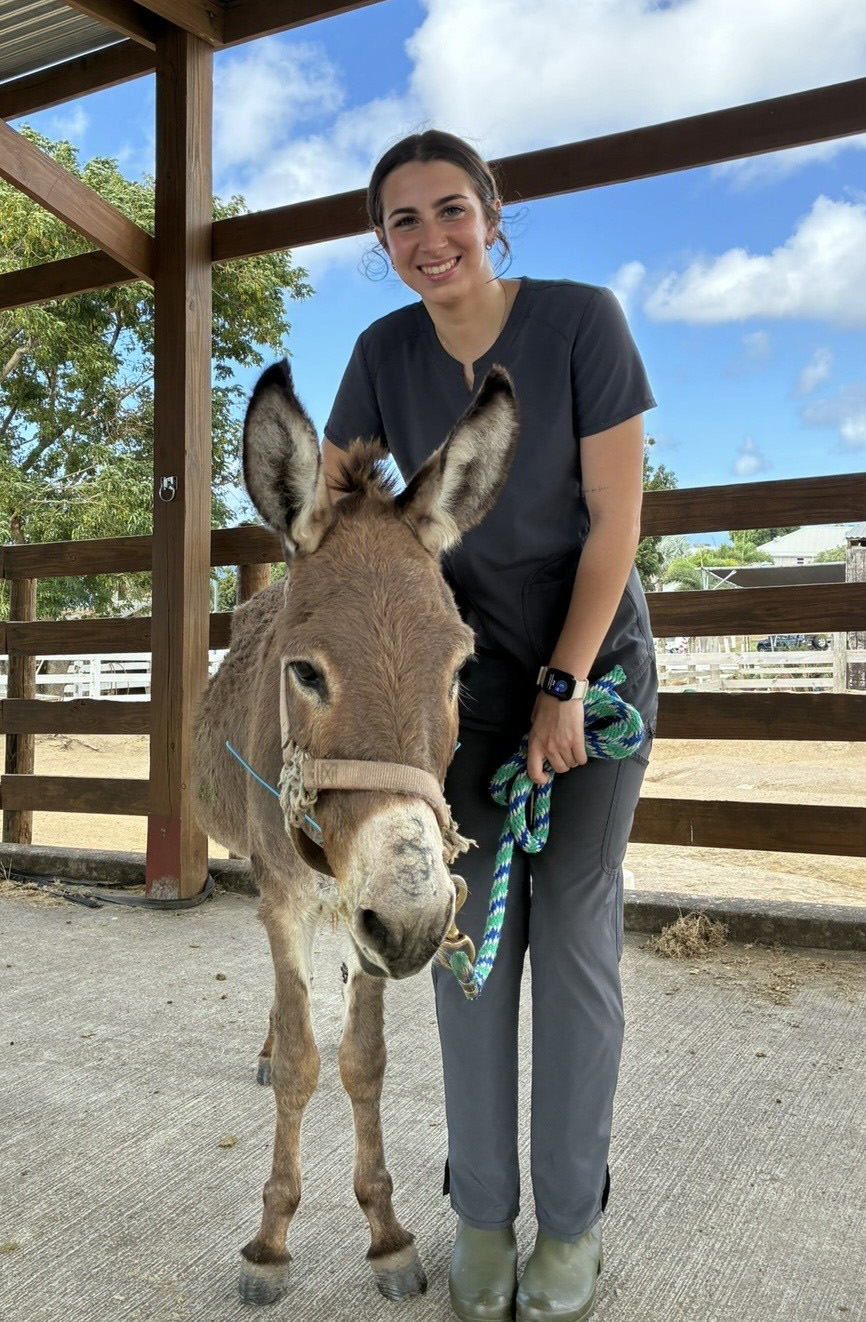 Natalie Rich '25, Rachel Houghtaling '24, and Michelle Williams '25 represent three
very different paths to the same goal, but all credit their time at MCLA with giving
them the foundation they needed to succeed.
Natalie Rich '25, Rachel Houghtaling '24, and Michelle Williams '25 represent three
very different paths to the same goal, but all credit their time at MCLA with giving
them the foundation they needed to succeed.
For Rich, now in her second semester at Ross University School of Veterinary Medicine in the Caribbean, MCLA offered something many larger institutions couldn't: the ability to pursue both her passion for soccer and her pre-veterinary studies in a place that felt like home. "I wanted to continue playing soccer in college, and MCLA offered a pre-veterinary program that allowed me to complete all of my required prerequisites," Rich says. "Living in Berkshire County further enhanced this experience, as the surrounding environment made the campus feel both welcoming and inspiring."
Houghtaling, now in her second year at Tufts Cummings School of Veterinary Medicine, was drawn to MCLA for equally practical reasons. "I was looking for a college with smaller class sizes that would allow me to build meaningful relationships with faculty members," she explains. "College can be incredibly expensive and knowing that I would be pursuing an advanced degree after my bachelor's, I wanted a school that offered strong academics at an affordable cost."
Williams, a first-year DVM student also at Tufts Cummings, shares that same appreciation for MCLA's intimate academic environment. "I was drawn to MCLA because of the small class sizes, strong faculty mentorship, and the opportunity to build meaningful relationships with professors who were deeply invested in my success," she says. As a commuter student, Williams found that MCLA's supportive environment made it possible to pursue rigorous coursework while also gaining veterinary experience outside the classroom.
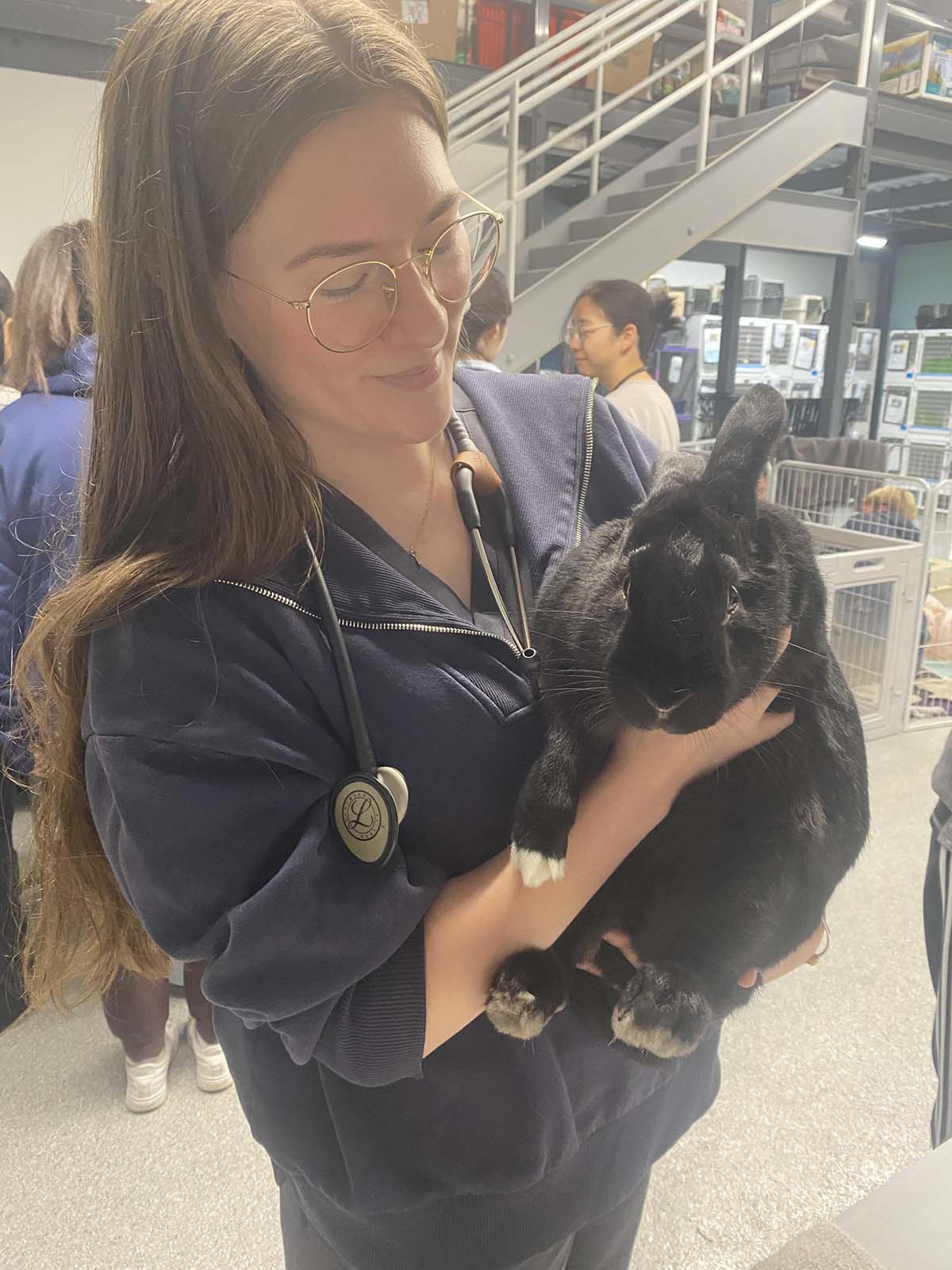 Rich completed two independent research projects and gained hands-on experience at
a local animal shelter through connections made at MCLA. "The faculty support played
a huge role in my preparation, especially my advisor, who guided me through the veterinary
school application process and ensured I was on the right track," she says.
Rich completed two independent research projects and gained hands-on experience at
a local animal shelter through connections made at MCLA. "The faculty support played
a huge role in my preparation, especially my advisor, who guided me through the veterinary
school application process and ensured I was on the right track," she says.
For Houghtaling, MCLA's approach to learning proved essential. "MCLA is structured in a way that forced me to build a strong foundation in how to study and retain information that has been essential to my ability to both learn and apply what I am learning at Tufts," she notes. "One of the things that helped me to prepare the most, though, was the level of independence it required. While faculty want you to succeed and provide support, you are expected to put in the effort yourself. In this program you have to be willing to put in a lot of patience, effort, and long hours."
Williams points to specific faculty and coursework as instrumental in her preparation. Courses in Microbiology, Parasitology, Anatomy, and Physiology gave her a head start in veterinary school, and a research experience with Professor Jonathan Clinger, including a presentation at MCLA's Undergraduate Research Conference, proved especially meaningful. "That experience helped me build confidence, strengthen my communication skills, and develop a research-based perspective that I continue to apply in veterinary medicine," she says.
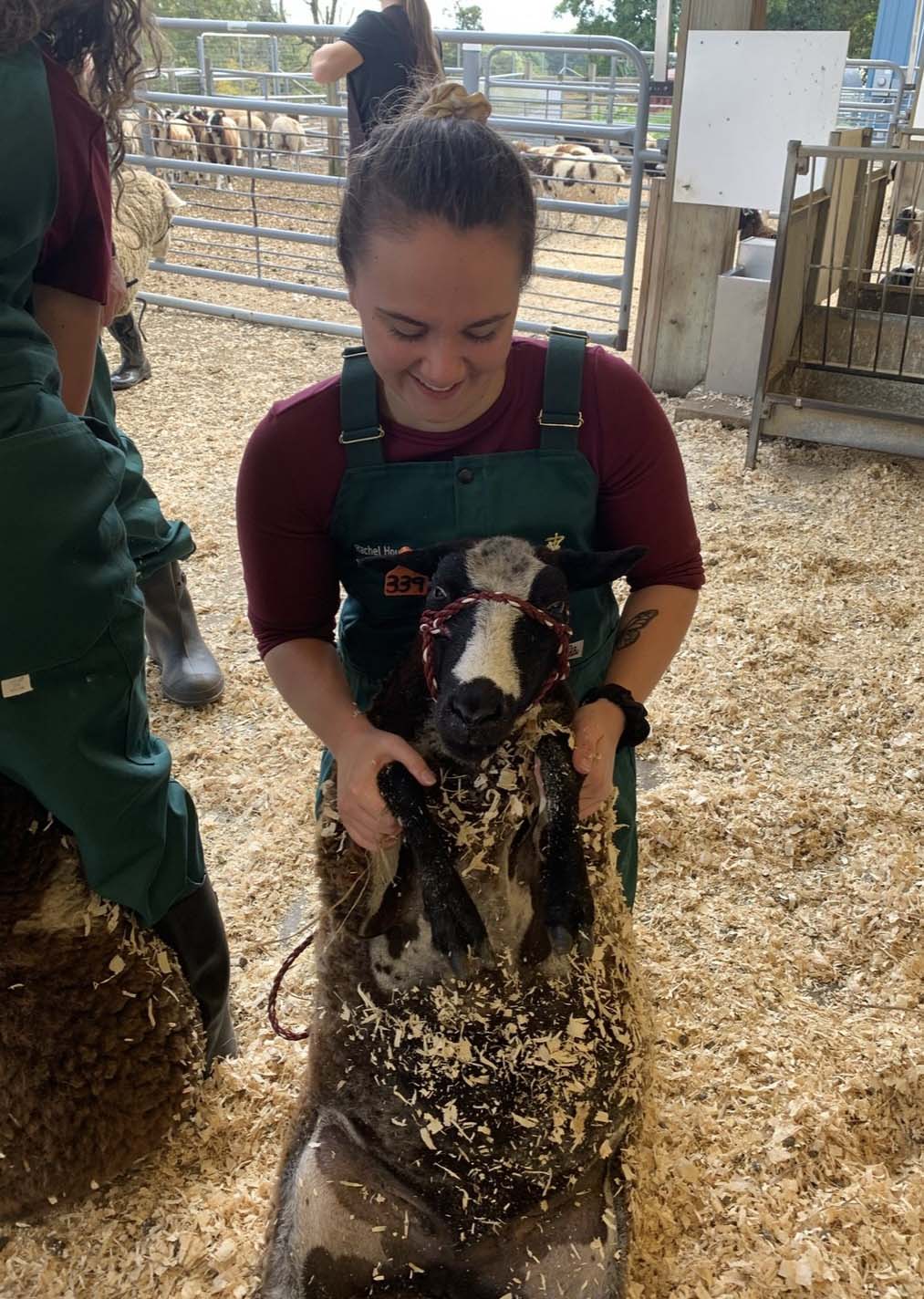 All three students describe their veterinary school experiences as challenging but
rewarding. Rich is enjoying the hands-on nature of her program at Ross, where the
Caribbean setting provides a unique backdrop for her studies. Houghtaling reflects
on the personal growth that comes with the challenge: "This program will not only
push you academically, but it will also push you to grow and develop as a person."
Williams, in her first year at Tufts, notes that the foundations she built at MCLA
have made her feel well prepared for the fast pace of veterinary school.
All three students describe their veterinary school experiences as challenging but
rewarding. Rich is enjoying the hands-on nature of her program at Ross, where the
Caribbean setting provides a unique backdrop for her studies. Houghtaling reflects
on the personal growth that comes with the challenge: "This program will not only
push you academically, but it will also push you to grow and develop as a person."
Williams, in her first year at Tufts, notes that the foundations she built at MCLA
have made her feel well prepared for the fast pace of veterinary school.
Rich advises current MCLA students to gain as much hands-on experience in clinical settings as possible and to research schools early, since prerequisites vary by program. Houghtaling emphasizes balance: "While it is really important to stay focused on your academics, make sure to still make time to do things that you enjoy and that remind you why you want to pursue veterinary medicine." Williams encourages students to master time management, seek out hands-on veterinary experience, and explore areas beyond the clinic, including research, to broaden their understanding of the field.
Together, Rich, Houghtaling, and Williams show that the path to veterinary medicine looks different for everyone. That all three earned seats in some of the country's most competitive veterinary programs in just two years speaks to what a public liberal arts education can offer students with the ambition to pursue it.