
Winning Formula: MCLA's Approach to Student-Athlete Success
February 5, 2026
The MCLA Athletics Department operates on a clear vision: 3-2-1. All student-athletes reaching and maintaining a 3.0 GPA, all teams competing for the top two spots in the conference, and all student-athletes and staff working as one team.
"Having our vision start with an emphasis on the importance of academics helps define the expectations of being a student first, then an athlete," says Laura Mooney, assistant dean of athletics & recreation.
 It's a philosophy that's paying off. More than 50% of MCLA's student-athletes are
achieving a 3.0 or higher, with many earning a 4.0. They're spread across 23 majors,
from business to pre-veterinary science to nursing to environmental studies.
It's a philosophy that's paying off. More than 50% of MCLA's student-athletes are
achieving a 3.0 or higher, with many earning a 4.0. They're spread across 23 majors,
from business to pre-veterinary science to nursing to environmental studies.
What sets MCLA apart is something many institutions can't offer: the majority of coaches are full-time employees. "Due to their full-time status, our coaches are able to provide daily support to our students, helping them transition academically and manage their time while in season," Mooney says. Those coaches work closely with faculty and academic affairs, building flexibility around practices and games so important academic requirements are met.
"Our student-athletes get opportunities here they would not get elsewhere," says Dr. Jeannette Smith, vice president of student affairs. "As a liberal arts college with a student-centered ethos, our student-athletes are empowered to take advantage of the full, holistic curricular and co-curricular experience. They study abroad, star in theater shows, serve as Resident Advisors, lead Student Government, and graduate from the honors program."
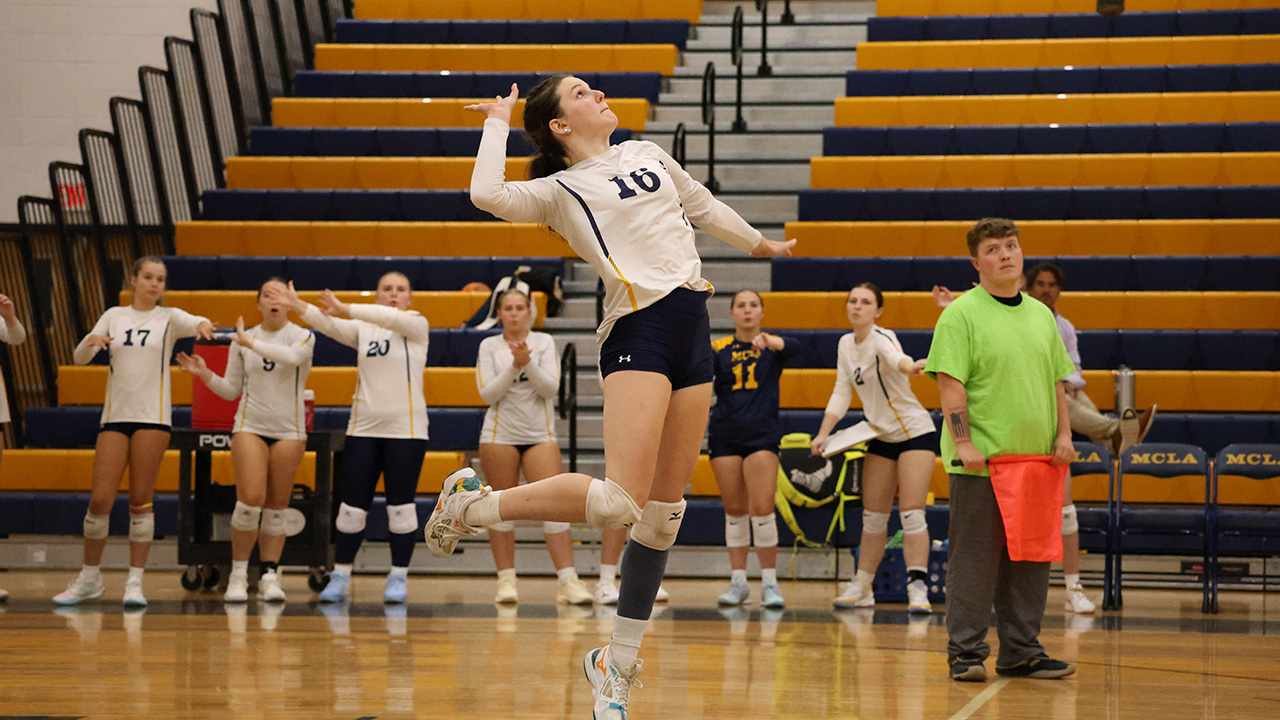
That support shows up in tangible ways. Liz Brown, a senior biology major from Lee, Massachusetts, and a MASCAC First Team volleyball player, has experienced it firsthand. "There have been countless times that faculty and staff have helped out," she says. "Athletes can miss multiple classes due to games and the faculty are super supportive as long as you communicate with them. Whether that be scheduling a meeting about the missed material, making up assignments, or even being flexible about assignment due dates. They have been extremely helpful when trying to excel in both academics and athletics."
Brown is pursuing a pre-veterinary concentration while working as a teaching assistant for microbiology, a lab assistant for biology courses, and interning with animals at MCLA's Feigenbaum Center for Science and Innovation. She has discovered that her volleyball season strengthens her academic performance. "I always find that I do better in my academics in the fall semester, which is at the same time as my sport," she says. "This is due to the routine I have to follow that forces me to have better time management."
 The small campus environment makes a difference, too. “The professors know every student
by name,” Brown says. ““When I see my professors walking in the hallways, I can have
conversations about things outside of class material and that is a really special
connection that big schools may not be able to offer every single student.'"
The small campus environment makes a difference, too. “The professors know every student
by name,” Brown says. ““When I see my professors walking in the hallways, I can have
conversations about things outside of class material and that is a really special
connection that big schools may not be able to offer every single student.'"
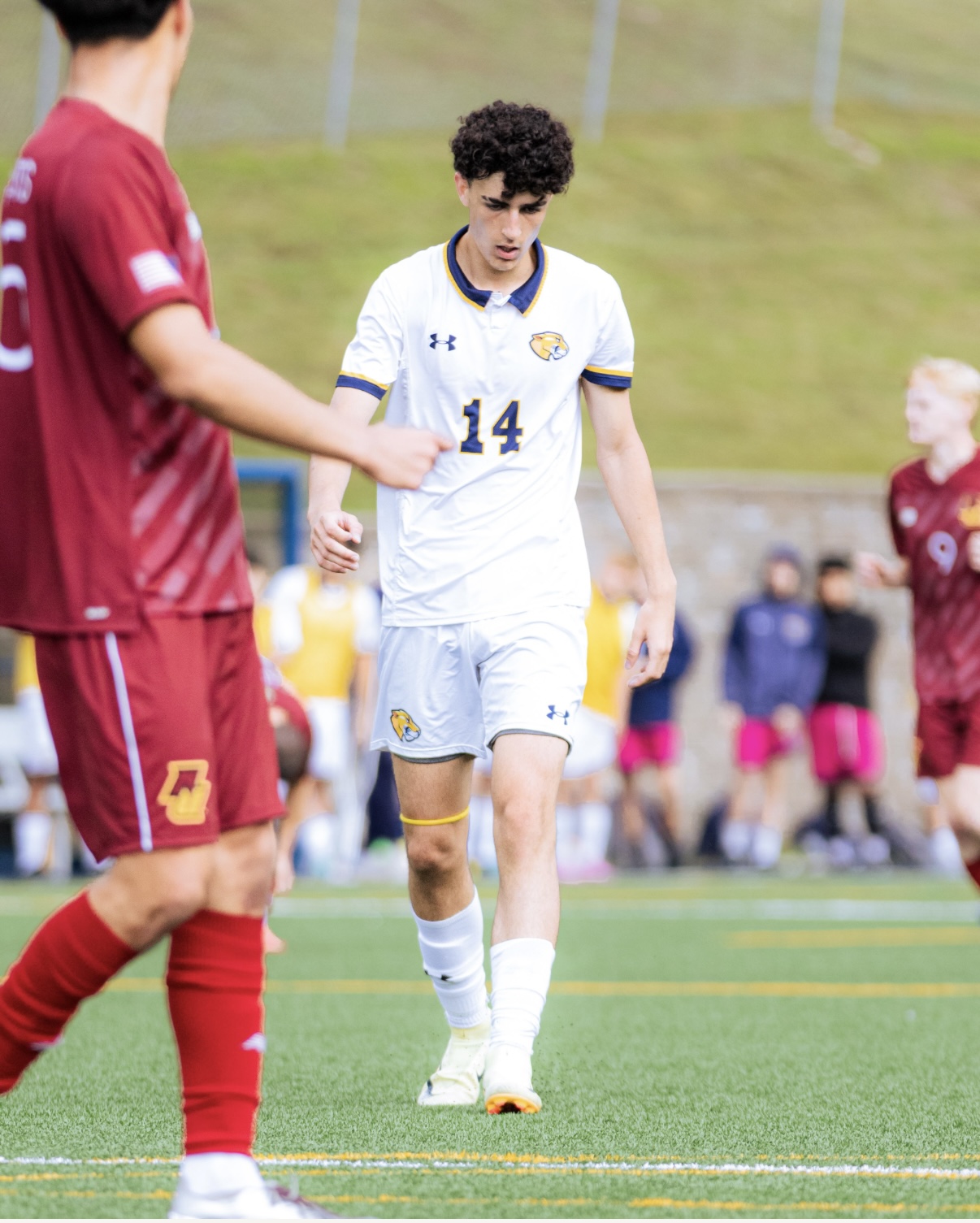
Gustavo De Oliveira, a first-year nursing major from Pittsfield and MASCAC Rookie of the Year for men's soccer, chose MCLA specifically because he could pursue both goals. "I chose nursing because I've always been passionate about helping others and making a positive impact on people's lives," he says.
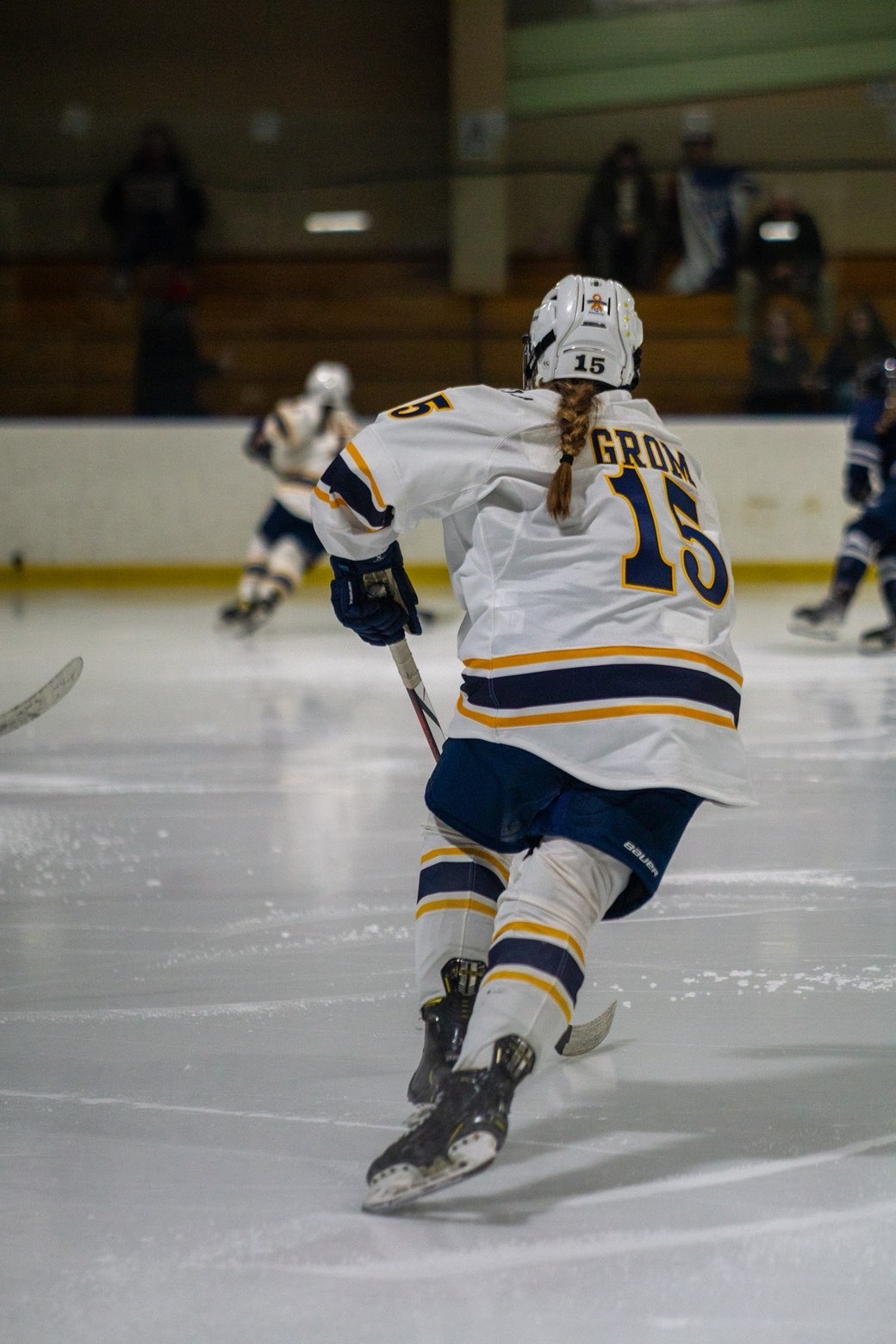
For Kiera Grom, a sophomore environmental science major from Livonia, Michigan, who plays women's ice hockey, the dual commitment comes with real challenges. "I wish people understood that student-athletes are just as committed to their academics as they are to their sports," Grom says. "Balancing a demanding major with practices, travel, and games requires a high level of dedication and planning."
"Student-athletes learn to work toward a common goal, communicate clearly, and respect different roles," says Dr. Ann Billetz, professor of biology and faculty athletics representative. "These skills translate directly into being effective team members in both industry and medicine, where collaboration and high performance are essential."
At MCLA, the 3-2-1 vision is more than a slogan. It's a framework that recognizes student-athletes as students first, supported by full-time coaches, collaborative faculty relationships, and a campus culture that values both academic achievement and athletic competition.
Photos by Dylan Schenck '27, Communications and Arts Management